Plays from YouTube (privacy-enhanced mode) only after you press play. Privacy
Tender Work to Subcontractors
How do I check a suspiciously low sub bid before I carry it, and award the subcontract?
Compare each sub's lump-sum quote with your own number; if one is far below the rest (in the example 22.8% under), call that bidder before your bid closes. Go through its scope, drawings, addenda, exclusions and arithmetic. In Canada, carrying a sub's price can bind you to it. Once your bid wins, award the price you carried; the award is final and creates a draft purchase order.
Three drywall subtrades priced your townhomes, and one came in more than a fifth lower. In Canada, carry the wrong sub's price in your bid and you may be held to it.
In this video
- When a bid binds: Contract A and Contract B, and the 1981 and 2001 Supreme Court of Canada decisions the lesson draws on.
- Bid depositories, and what carrying a sub's price commits you to.
- Package one trade from its own estimate, log each quote as one lump sum, and compare the quotes with your number.
- Why a low bid far below the others needs a scope call before your bid closes.
- Award the subcontract: it is final, and it creates a draft purchase order.
You will produce
A tendered drywall package with three logged quotes, a checked low bid and an awarded subcontract with a draft purchase order
Transcript
0:00 The rules
Three drywall subtrades have priced your townhomes. Two quotes sit close to your own number, and the third comes in more than a fifth lower. Carry the wrong one in your bid, and you may be held to it. Here is the plan. First, the Canadian tendering rules: when a bid binds, and what carrying a sub's price commits you to. Then you package the drywall from your estimate, log three quotes and compare them with your number. You check the low bid before you trust it, and you award the work. In Canada, a bid can be a contract of its own. In 1981 the Supreme Court looked at a bid that had left out more than $750,000. The bidder found the mistake after the bids were opened and would not sign, so the owner kept its $150,000 deposit. When the tender call intends it, a bid forms Contract A, and while it runs, the bid can't be withdrawn. The building contract that follows is Contract B. Subtrades bid under the same idea. In some provinces, they file sealed bids at a bid depository run by a local construction association, before the general contractors close their own bids. Its rules say how long a sub's price holds, and what you owe the sub whose price you use. Using a sub's price in your bid is called carrying it. In 2001 the Supreme Court held a general contractor to a sub's bid it had carried from a Toronto bid depository. Once it won the job, it had to give that sub the subcontract, unless it had a reasonable objection. So check a price before your bid closes, not after.
1:32 Package and quotes
In the app, a tender starts from your estimate. The To tender button packages the whole estimate, and it can't pick out one section. So give each trade you tender a second estimate of its own, in the same project. Here the drywall sits in one called Drywall package, at $244,200. Click To tender, then Create package. The package starts as a draft. Click Issue, then Start Collecting. Each one only changes its status. Neither sends anything to your subs, so get the drawings and specs out to them the way you always do. As the quotes come in, log each one with Add Bid. Type the company and its total in Canadian dollars. The form takes one lump sum per quote, which is how subtrades usually price a bid form. Two quotes are in already. Quillon Drywall comes in at $188,500.
2:25 Compare and check
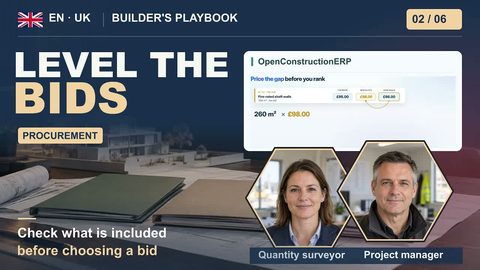
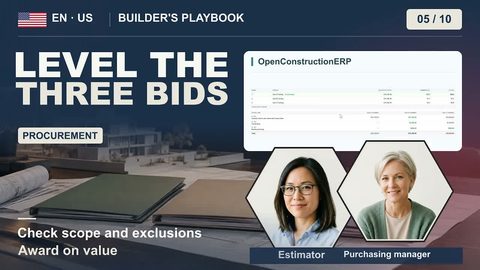
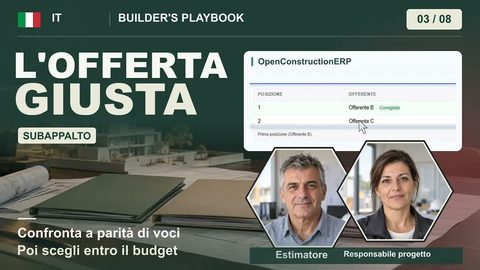
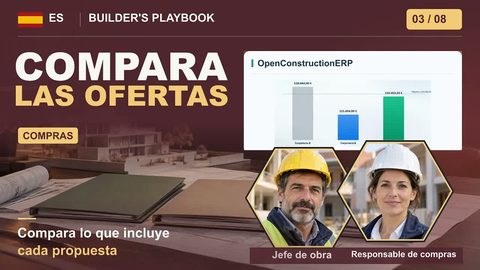
Each bar is one quote, and the dashed line is your own number. The total row shows every quote against it: Halberd and Ellory are a little over, and Quillon is 22.8% under. Two things are left to you. Each quote is one lump sum, so the line prices stay at zero and levelling has nothing to work with. Compare the totals. And a sub's qualifications don't show on this page, so read each quote yourself before you carry it. Under the table, the app gives its recommendation. Quillon is the lowest, but the card says low confidence. The lowest bid is 23.5% below the middle bid, so verify scope and pricing before you award. The app flags the gap, and finding the reason is up to you. A quote that far below the rest can hide a gap, like the 1981 bid. So before your own bid closes, call the low bidder and go through its scope. Check that it covers every drawing and every addendum, ask what it excludes, and check the arithmetic. Here the call finds the gap: Quillon left out the fire-rated party walls. You carry Halberd's price instead, and put your reason in writing.
3:35 Award
Your bid wins the job, so award the subcontract to the price you carried. Click Evaluate Bids, then Award on Halberd's row. The app warns that this can't be undone, so confirm it. Halberd is accepted and the other two are rejected, and a draft purchase order for $246,540 appears in Procurement. Your estimate keeps your own number. So package one trade from its own estimate, log each quote as one total, and read the total row against your number. When a low bid stands out, call before your bid closes, because the price you carry can bind you. Award is final. OpenConstructionERP is free and open source, and it runs on your own server. There's no subscription and no per-seat licence. Download it and tender your next trade.