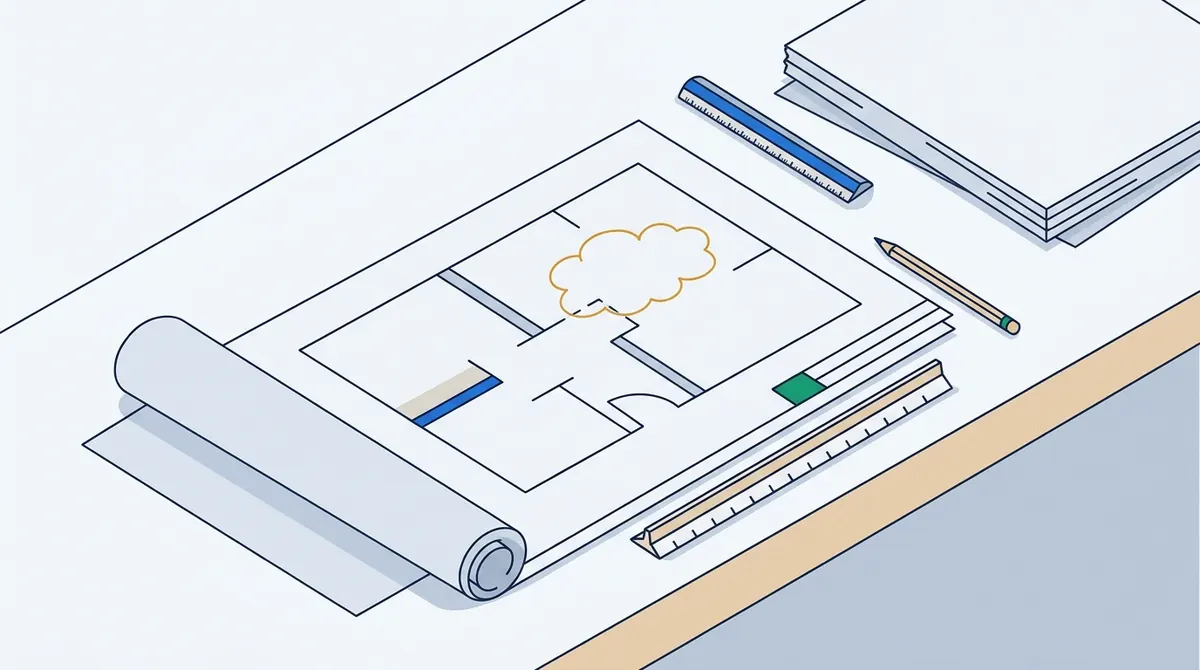
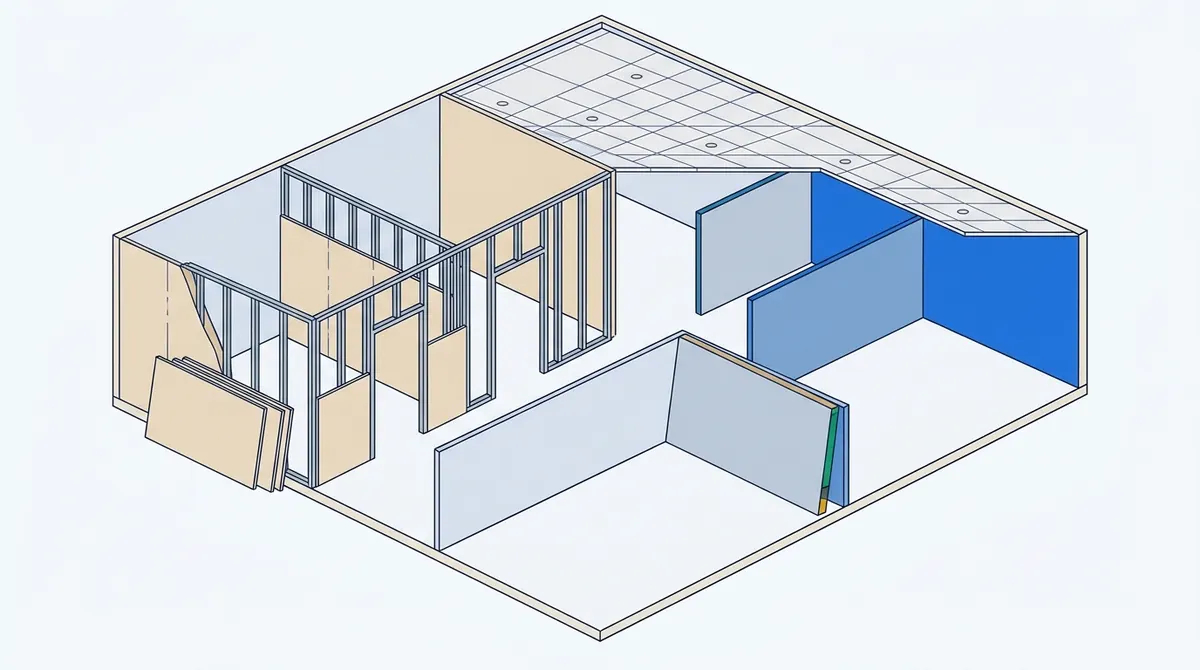
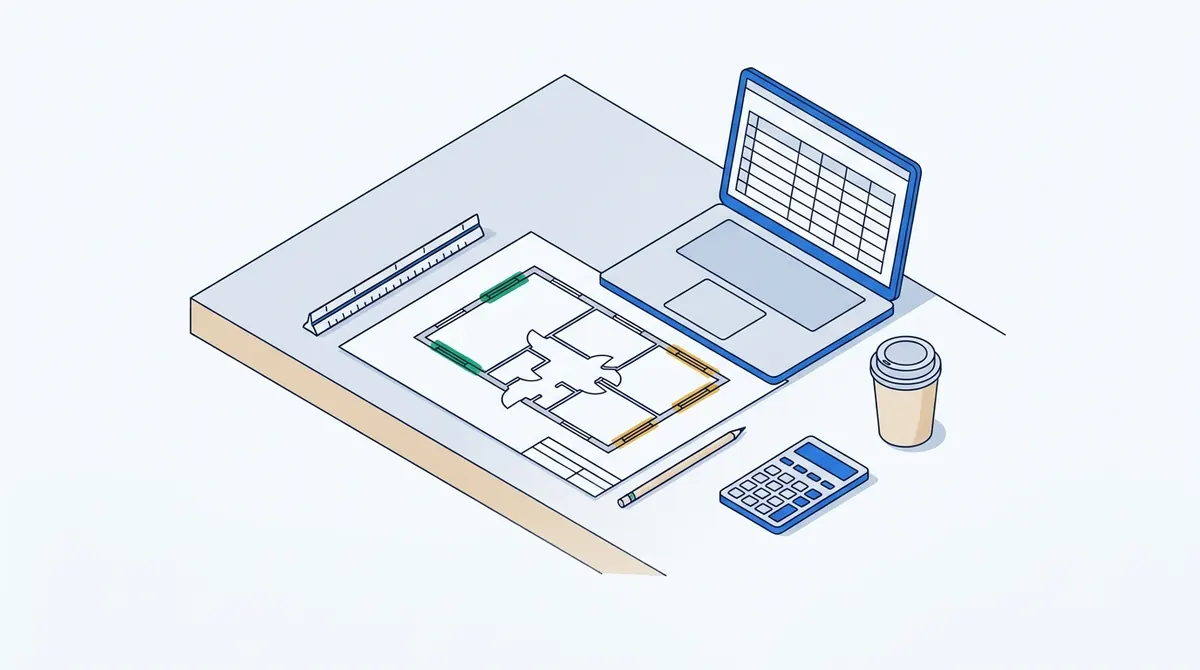
Explain what an instruction changes and why it is valued as its own item.
Choose between bill rates and fair rates, and say why.
Add overheads and profit on the net, and move the contract sum.
1 / 7
The design changes after the contract is signed
The architect issues an instruction.
The work changes: more, less, or different.
The price has to change with it.
Contracts expect change. An instruction is the formal way to change the work, and the contract says how the change is to be valued.
2 / 7
First, say what has changed in scope
List every item the instruction adds or omits.
Measure each against the drawings, as for the bill.
Quantities and units must match the bill's, or the rates will not fit.
Value only what the instruction changes. The rest of the contract sum stays where it is.
3 / 7
Which rates to use
Where the work is of a similar character, use the bill's own rates.
Where it is not, price it fairly from a build-up.
Whatever you use, say why in the valuation.
Same kind of work, same conditions, similar quantityBill rates
Different kind of work or different conditionsFair rates
Work nobody can compare to the billFair valuation
The bill is evidence of what both sides agreed that kind of work costs. Departing from it needs a reason you can explain to the client's QS.
4 / 7
What travels with the rates
The bill's overheads and profit percentages apply to the change.
Preliminaries only where the change affects time or site running.
VAT never belongs in a valuation.
£10,000
Net cost at bill rates £10,000
Overheads £600
Profit £400
Illustrative figures. Keep to the same percentages the bill used, and add a row only where you can say what extra cost it covers.
5 / 7
Add on the net, not on each other
Overheads and profit are each a share of the net, if that is how the bill stated them.
Profit on top of overheads is a different base and a different sum.
Same percentages, base changed: 24 pounds apart on 10,000.
Both percentages on the net
£11,000 (£10,000 + £1,000)
Profit on net plus overheads
£11,024 (£10,000 + £1,024)
Small on a small variation, large over a year of variations. Keep one base and keep it the same as the tender.
6 / 7
Moving the contract sum
Only an agreed valuation moves the contract sum.
It moves by the full valued amount, with overheads and profit.
The change is recorded against the instruction that caused it.
Contract sum before£2,400,000
Variation valued£4,200
Contract sum after£2,404,200
The contract sum is a living number: original sum plus every agreed variation. Each one should be traceable to an instruction.
7 / 7
Three questions before you submit
Did I price only what changed?
Are my rates the bill's, and is my reason for any other rate written down?
Have I added only the layers the bill adds, each once?
A variation account that answers these three questions is hard to argue with, and quick to agree.
Стрелки или плъзгане
Value an added partition
An instruction adds partitions and doorsets. Same method, different numbers from your task.
Не е в мащаб
Задачата
Added: 72.00 m² of partition at the bill rate of £41.50 per m², and 3 doorsets at the bill rate of £285.00 each.
The bill adds overheads 6% and profit 4%, each on the net.
Contract sum before the instruction: £2,400,000.
??
Partitions ?
Doorsets ?
£2,988£855
Partitions £2,988
Doorsets £855
Стъпка 1 от 4
Net cost of the added work
Partitions at the bill rate plus doorsets at the bill rate. What is the net? Give pence.
Подсказка: Two lines, each quantity times its bill rate, then add.
Partitions 72.00 m² × £41.50 = £2,988.00. Doorsets 3 × £285.00 = £855.00. Net £3,843.00.
£3,843??
Net £3,843
Overheads ?
Profit ?
£3,843
Net £3,843
Overheads £231
Profit £154
Стъпка 2 от 4
Overheads and profit
Overheads and profit are each a percentage of the net. How much do they add together? Give pence.
Подсказка: Both percentages are taken of the same net.
Overheads 6% of £3,843.00 = £230.58. Profit 4% of £3,843.00 = £153.72. Together £384.30. No preliminaries: the rooms do not change the site's running. No VAT: a valuation is without VAT.
1 Net
2 Additions
3 Оценка
1 Net
2 Additions
3 Оценка
Стъпка 3 от 4
The variation value
Net plus the additions. What is the valuation of the instruction?
Подсказка: Add the two results together.
£3,843.00 + £384.30 = £4,227.30. This is what you put to the client's QS for agreement.
Преди£2,400,000
Промяна£4,227.30
След?
Преди£2,400,000
Промяна£4,227.30
След£2,404,227
Стъпка 4 от 4
Новата договорна сума
След като оценката бъде съгласувана и възлагането е завършено, каква е договорната сума? Закръглете до най-близкия паунд.
Подсказка: Добавете оценката към предишната договорна сума.
£2,400,000 + £4,227.30 = £2,404,227. Договорната сума се променя с цялата съгласувана оценка, а не с нетната стойност.
Накратко. Остойностете промените по единичните цени от КСС, когато работата е аналогична; добавете процентите от КСС еднократно върху нетната стойност; променете договорната сума със съгласуваната стойност.
Проверете се
Въпрос 1 от 3
Инструкция добавя 30 m² от същия тип преградна стена като в КСС, на същия етаж, при същите условия. Коя единична цена използвате?
Същата работа, същите условия, подобно количество: КСС е договореното доказателство за нейната цена.
Пазарните цени може да се различават от договорените за работа, която не се различава от тази в КСС.
Офертата от подизпълнител е ваш разход, а не основа за оценка по договора.
Въпрос 2 от 3
Нетната стойност на промяната е £5,000. КСС добавя режийни разходи 6% и печалба 4%, всеки върху нетната стойност. Каква е оценката?