







































Course introduction · 3 min
Getting paid as a subcontractor (UK, Construction Act)
You are the quantity surveyor for the masonry subcontractor on a two-storey health centre in England: the person who makes sure the firm is paid for the walls it builds. In five tasks you follow one subcontract from a short payment to a notice of adjudication, using the payment rules of the Construction Act.
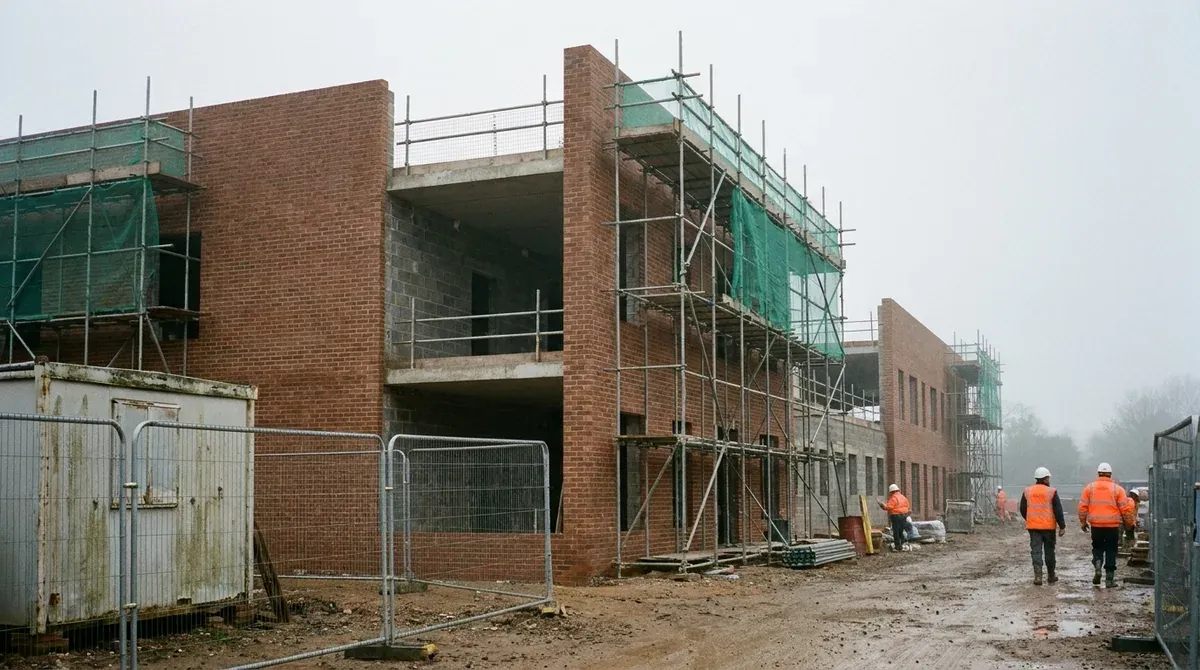 Fictional project
- Package
- Brick and block walls, four lines priced per square metre
- Subcontract
- A bespoke subcontract with monthly applications and 3 % retention
- Law
- Housing Grants, Construction and Regeneration Act 1996, as amended in 2009
- Work in the ERP
- 5 tasks, about 1 h 27 min
Who hands what to whom
Every arrow is a document that reaches your desk or leaves it, and the task where that happens.
Comes to you
- Main contractorPays your applications
- A short paymentTask 1
- A late pay less noticeTask 2
- Site instruction SI-07Task 4
 YouSubcontractor's quantity surveyor
Goes from you
- Applications 1 to 3Task 3
- Variation SV-01Task 4
- Notice of adjudicationTask 5
The project and the people are fictional. Portraits are generated.
Your route through the job
Three tasks on getting paid, one on a change, one on a dispute. Start with task 1: in Contracts you submit application 1 and find what is still owed.
Getting paid
Task 1 · 12 min
Paid short with no notice: what is still owed
- You produce
- What is still owed after a short payment
- Document
- Application 1 and the payment record
- In the ERP
- Contracts, Progress Claims
Getting paid
Task 2 · 15 min
A pay less notice one day late
- You produce
- The sum payable despite a late pay less notice
- Document
- Application 2 and the pay less notice
- In the ERP
- Contracts, Progress Claims
Getting paid
Task 3 · 20 min
Application 3: carry the shortfall forward
- You produce
- Application 3, with the shortfall carried
- Document
- Cumulative application
- In the ERP
- Contracts, Progress Claims
Change
Task 4 · 20 min
SI-07: price and submit a subcontract variation
- You produce
- Variation SV-01, priced and submitted
- Document
- Site instruction SI-07
- In the ERP
- Variations, Requests
Dispute
Task 5 · 20 min
Notice of adjudication for the unpaid sum
- You produce
- The sum claimed in a notice of adjudication
- Document
- Notice of adjudication
- In the ERP
- Contracts, Progress Claims
How a wall becomes money in the bank
Each step below is one task, in the order the money moves.
Blue is what the task adds; grey is carried over from before.
In short. Apply on time. Pay the notified sum unless a valid notice came in time. Claim what was not paid, once.