







































Stage 4 of 7 · Procure
Procurement, purchase orders and stock
Order materials and subcontracts against the budget and track what arrives.
- CoursesCourse in preparation
- Free videos10 videos
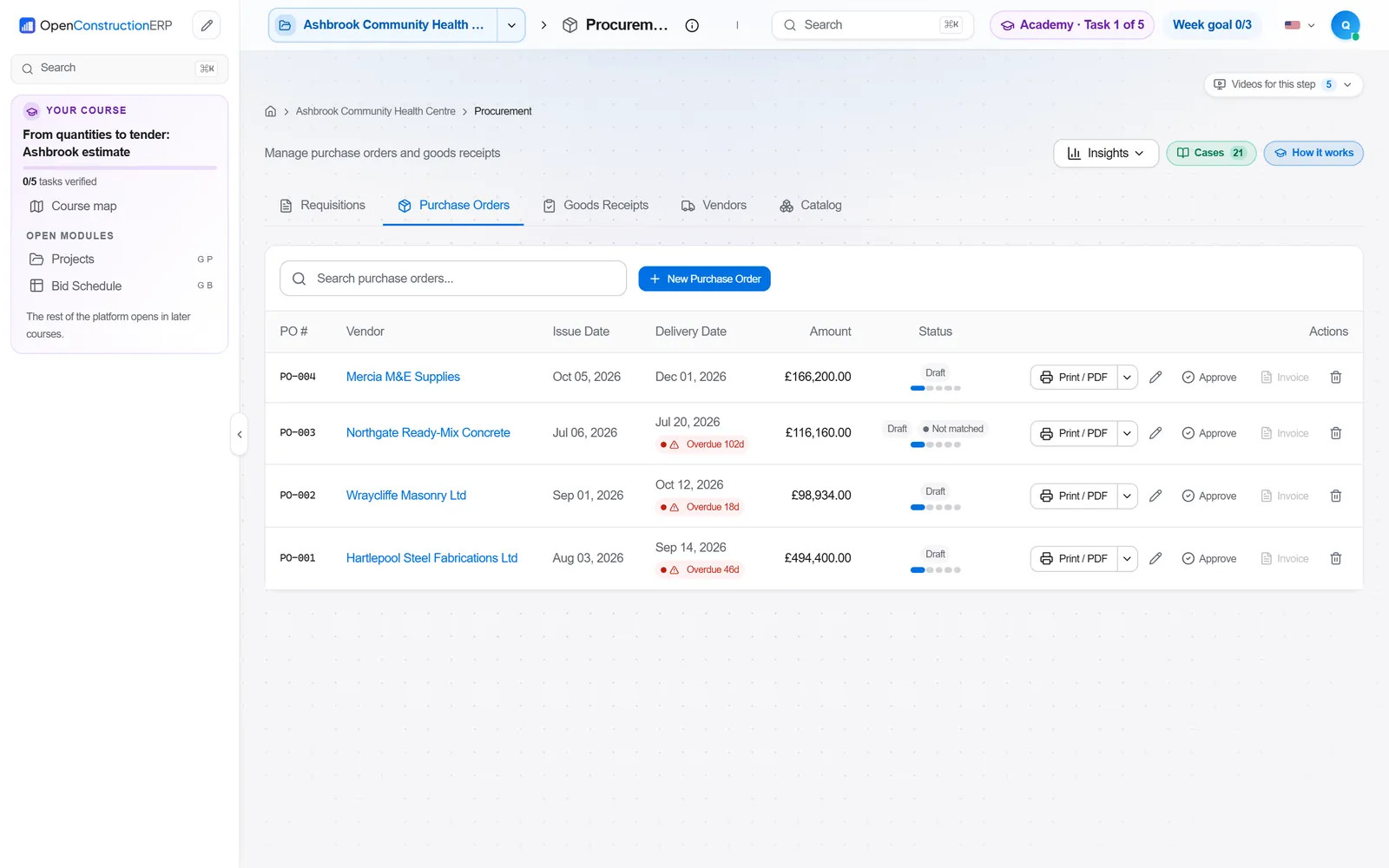
- Output
- Purchase orders, goods receipts and stock records
- Module
- Tendering and procurement
- Documents
- Standards and references
What it is
Procurement on a construction project is the buying of materials, plant hire and subcontract services after the budget is set. It includes raising requisitions, obtaining quotes, placing purchase orders, expediting deliveries, receiving goods and matching invoices to orders and receipts. Materials with long lead times, such as steel, lifts or switchgear, must be ordered early enough to support the programme.
Good procurement controls cost and time together. Each order commits cost against the budget, so committed cost reports show the real position long before invoices arrive. Goods receipts prove what was delivered and prevent paying for items not received. Poor procurement shows up as site delays, emergency purchases at higher prices, surplus stock and disputes with suppliers over quantities and quality.
Who does it
- Buyer or procurement manager
- Obtains quotes, places orders and manages suppliers.
- Site manager or engineer
- Raises requisitions for what is needed and when, and confirms deliveries.
- Storekeeper
- Receives goods, records stock and issues materials to site.
- Quantity surveyor
- Checks orders against the budget and reports committed cost.
- Accounts payable
- Matches invoices to orders and receipts before payment.
How it runs
Plan procurement
Draw up a schedule of what must be bought and when, highlighting long-lead items against the programme.
Raise requisitions
Site or project staff request materials with quantities, specifications and required dates.
Obtain quotes
Request prices from approved suppliers and compare them on equal terms.
Place purchase orders
Issue orders with price, quantity, delivery date and terms, committing cost to the right code.
Expedite and receive
Track deliveries, then record goods received with quantities and condition.
Manage stock
Record stock in and out so materials can be traced and surplus reused or returned.
Match invoices
Pay only when invoice, order and goods receipt agree.
How it differs by country
- United Kingdom
- The Construction Act 1996 (Housing Grants, Construction and Regeneration Act), as amended, sets payment notice rules for construction contracts, which affects subcontract procurement. The domestic reverse charge for VAT applies to many construction services between businesses.
- Germany
- Purchases of materials fall under the sales law of the BGB and the HGB for merchants, which includes a duty to inspect and give prompt notice of defects (§ 377 HGB). Subcontract work is commonly let on VOB/B terms.
- France
- Subcontracting is governed by the law of 31 December 1975, which requires subcontractors on public works to be accepted by the client and allows direct payment above a threshold. Supplier payment terms are limited by the Code de commerce.
- United States
- Suppliers and subcontractors usually have mechanic's lien rights on private projects and payment bond rights on public projects under the Miller Act and state Little Miller Acts. Lien waivers are commonly collected with each payment.
- International
- Cross-border procurement needs attention to Incoterms, import duties, currency and lead times. FIDIC contracts include provisions on plant and materials intended for the works and when they may be paid for.
Common mistakes
- Ordering long-lead items late because the procurement schedule was not tied to the programme.
- Placing orders without a cost code, so committed cost does not show in reports.
- Paying invoices without a matching goods receipt.
- Letting site staff place verbal orders that are not recorded until the invoice arrives.
- Ignoring surplus stock at the end of the job, which is then written off or lost.
In OpenConstructionERP
Module: Tendering and procurement
OpenConstructionERP supports buying through the Procurement module for purchase orders, goods receipts and vendor management. Subcontractor Management holds subcontract agreements, payment applications, retention and rating. RFQ & Bidding can be used to obtain and compare supplier quotes before an order is placed. The Contract Types Engine records the commercial basis of each subcontract. Suppliers, price lists and stock control are covered in the cost data group by Supplier Catalogs & Vendor Management, which links prices to the orders raised.
Procurement · Subcontractor Management · RFQ & Bidding · Contract Types Engine · Supplier Catalogs & Vendor Management
The app runs at openconstructionacademy.com/app for course learners.
Free videos
 1:58Избор на подизпълнител: сравнение на оферти по цена и срокБългарски
 4:36Achats et stock : suivre les quantitésFrançais
 5:20暂估价招标:比价、清标、定标,最低价未必最省中文
 5:17材料调差与费用索赔:钢筋涨价和停工7天怎么算中文
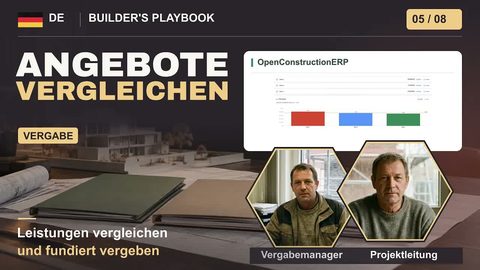 3:43Vergabe im BauwesenDeutsch
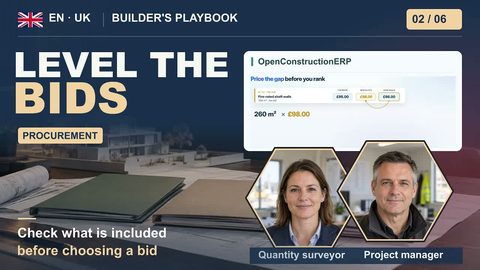
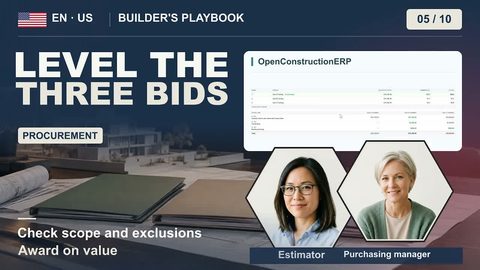 3:10Bid Leveling: Three Quotes, One JobEnglish
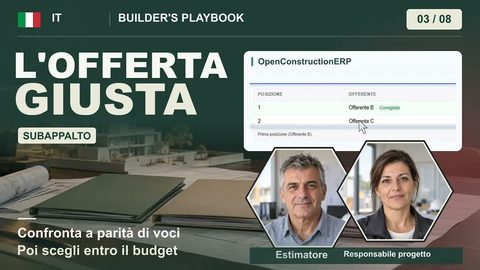 4:59Subappalto: confrontare le offerte e scegliere l'impresaItaliano
 7:01Material und Teillieferung verfolgenDeutsch
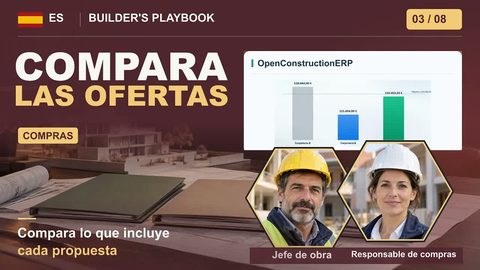 2:10Comparativo de ofertas de obra: precio, alcance y adjudicaciónEspañol
Courses
A course on this process is in preparation. Until then, the videos above cover it.
Checklists
Short checklists that go with this process.
Practise it in OpenConstructionERP
The free videos explain the process. The full course lets you run it yourself in the ERP, task by task.