







































Stage 4 of 7 · Procure
Contracts: FIDIC, NEC, JCT, AIA, VOB
Choose and administer the contract form that sets price, risk, time and payment rules.
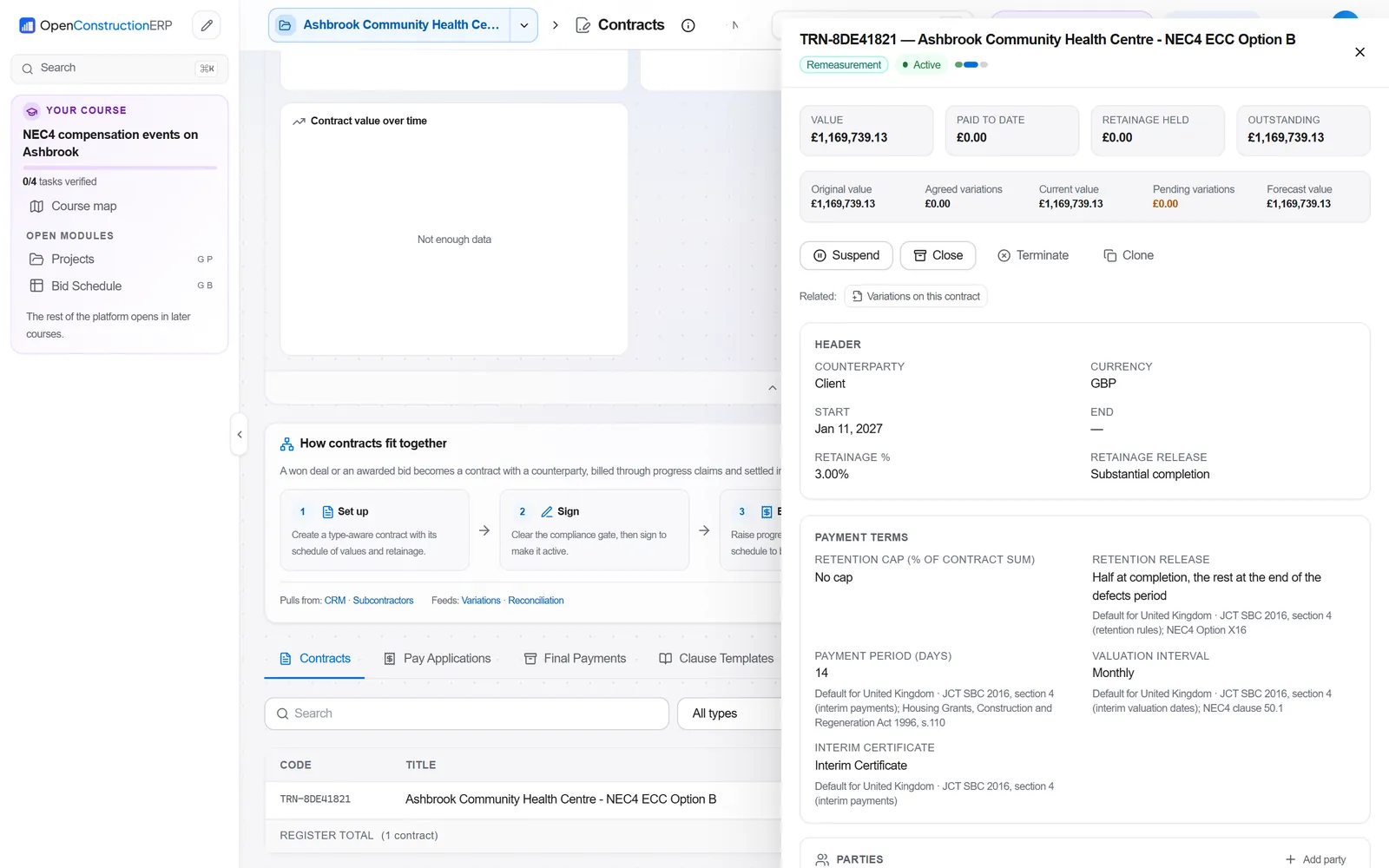
- ProfessionalУчилище в Белостен: обществена поръчка по ЗОП, чл. 72 и изменение на договора
- Free videos22 videos
- Output
- Executed contract and contract administration record
- Module
- Change, variations and claims
- Documents
- Standards and references
What it is
Construction contracts set out who carries which risk, how the price is calculated, how change is valued, how and when payment is made and what happens when things go wrong. Standard forms such as FIDIC, NEC, JCT, AIA and VOB/B are widely used because their terms are known, tested and balanced to a degree that bespoke drafting rarely achieves. The choice of form and pricing option matters as much as the price itself.
Contract administration is the daily work of operating the contract: issuing notices on time, recording instructions, valuing variations and certifying payment. Many disputes arise not from the contract wording but from missed notices and poor records. A team that knows its notice periods and keeps an orderly record of instructions and events is in a far stronger position when claims are made.
Who does it
- Contract administrator or engineer
- Operates the contract on the client side: issues instructions, certifies and values.
- Commercial manager
- Manages the contractor's contractual position, notices and claims.
- Project manager
- Makes decisions that have contractual consequences and must know the notice rules.
- Legal adviser
- Reviews amendments and advises on disputes.
- Client
- Decides the procurement route and the risk allocation it is prepared to accept.
How it runs
Select the form and pricing basis
Choose the standard form and option that suit the risk allocation, such as lump sum, remeasured, target cost or cost-plus.
Complete the contract data
Fill in dates, rates, retention, liquidated damages and other particulars, and record any amendments.
Execute and distribute
Sign the contract and give the team a summary of key obligations and notice periods.
Record instructions and events
Log every instruction, notice and event that may affect time or money as it happens.
Issue notices on time
Give and respond to notices within the periods the contract requires.
Value change and certify payment
Value variations under the contract rules and certify interim payments on schedule.
Close out
Agree the final account, release retention and close the record.
How it differs by country
- United Kingdom
- JCT forms such as the Standard Building Contract and Design and Build Contract are common in building. NEC4 Engineering and Construction Contract offers main options A to F, from priced contract with activity schedule to cost reimbursable, and relies on early warnings and compensation events.
- Germany
- VOB/B is the standard set of contract terms for construction works, used mandatorily on public works and often on private projects. The BGB construction contract law in §§ 650a ff. applies alongside it, including the client's right to order changes under § 650b.
- France
- Public works contracts usually refer to the CCAG-Travaux, the general administrative terms, last revised in 2021. Private works often use the NF P 03-001 standard terms.
- United States
- AIA A101 is the owner-contractor agreement on a stipulated sum and A201 the general conditions that sit behind it. ConsensusDocs is an alternative family of forms developed with contractor and owner associations.
- International
- The FIDIC 2017 suite includes the Red Book for employer-designed work, the Yellow Book for plant and design-build and the Silver Book for EPC turnkey projects. Under Sub-Clause 20.2 the contractor must give notice of a claim within 28 days of becoming aware of the event, or risk losing the entitlement.
Common mistakes
- Missing a contractual notice period, which can extinguish an otherwise valid claim.
- Heavily amending a standard form without understanding how the changes interact with the rest of the contract.
- Choosing a lump-sum form when the design is too immature to support it.
- Acting on verbal instructions without written confirmation.
- Not briefing site staff on the contract, so they agree changes they have no authority to agree.
In OpenConstructionERP
Module: Change, variations and claims
OpenConstructionERP maps contract administration to its change, variations and claims modules. Variations & Site Measurements follows the path from notice to variation order, including site measurement and daywork. Change Orders records scope changes, cost impact and approval. Claims Evidence assembles an ordered evidence pack for a claim or dispute, and Event Reconciliation pulls one event together across modules and channels. Change Intelligence shows what is waiting on whom, which helps teams keep to notice periods. Cost Recovery records back-charges against responsible parties.
Variations & Site Measurements · Change Orders · Claims Evidence · Event Reconciliation · Change Intelligence · Cost Recovery
The app runs at openconstructionacademy.com/app for course learners.
Free videos
 7:26Licitação de obras públicas: proposta e regra dos 75%Português
 7:29Medição de obra pública: boletim, aditivo de 25% e reajuste INCCPortuguês
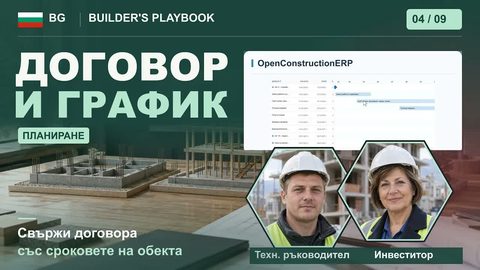 2:18Договор и линеен график: срок, аванс и етапи на строителствотоБългарски
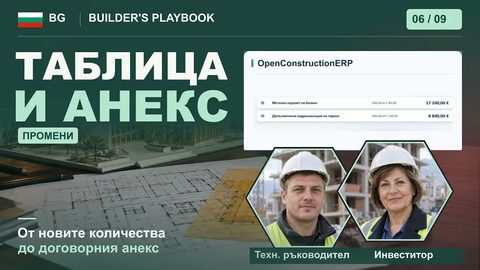 2:03Заменителна таблица и анекс: как се отчитат промените в СМРБългарски
 4:57CCDC 2 Monthly Progress DrawEnglish
 4:45Manage Construction Change OrdersEnglish
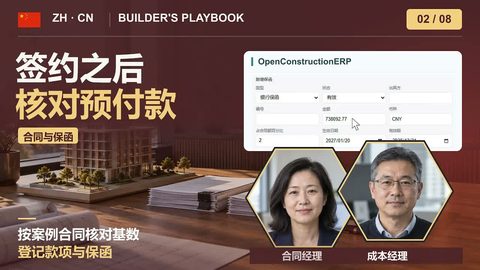 5:25预付款基数怎么核对:签约一周的三笔钱与三张保函中文
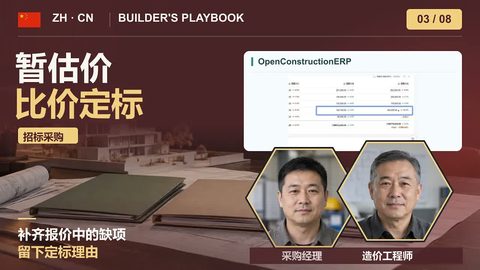 5:20暂估价招标:比价、清标、定标,最低价未必最省中文
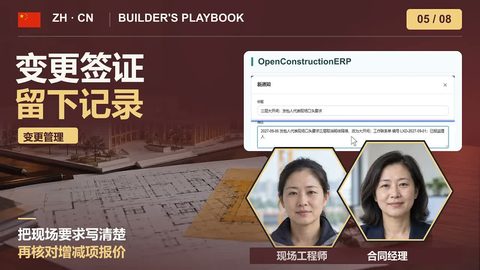 5:05变更与签证:口头指示变书面,按合同期限报价中文
22 videos
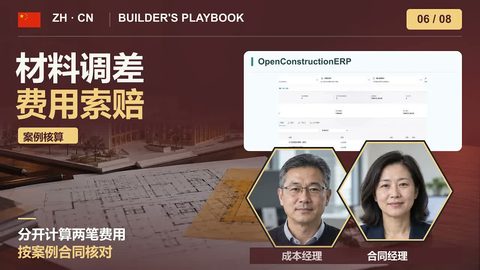 5:17材料调差与费用索赔:钢筋涨价和停工7天怎么算中文
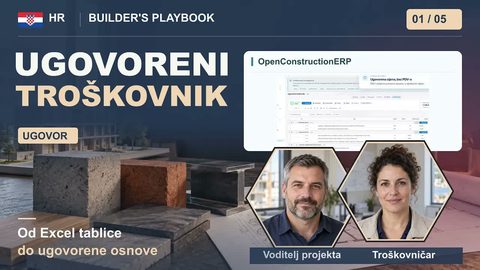 4:10Ugovoreni troškovnik: uvoz iz ExcelaHrvatski
 4:50Podizvođači: ugovor, situacija i plaćanjeHrvatski
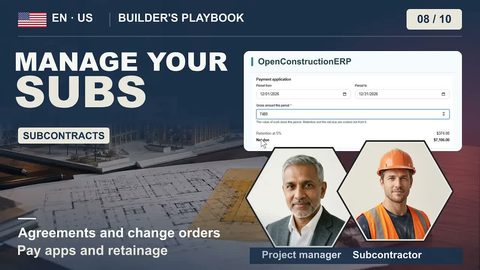 3:13Manage Your Subs: Pay, Hold BackEnglish
 4:37Facturation, retenue et hypothèque légaleFrançais
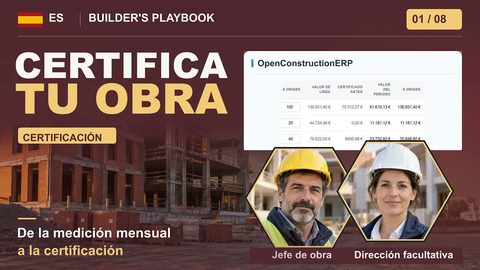 3:21Certificación de obra: del avance mensual al cobroEspañol
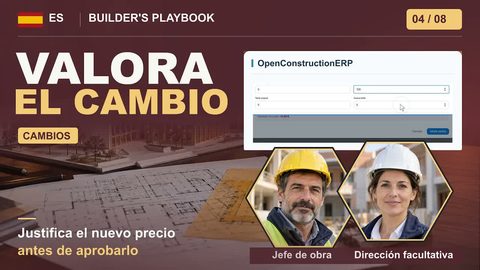 2:09Precio contradictorio: valorar y aprobar un cambio de obraEspañol
 2:00Recepción y liquidación de obra: repasos, certificación y garantíaEspañol
 6:01How to Compare Subcontractor BidsEnglish
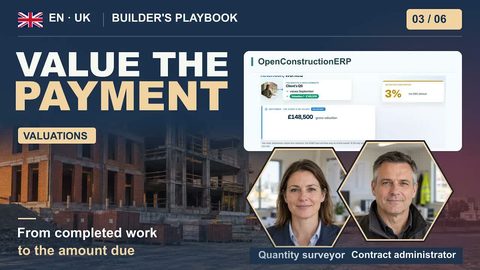 6:25JCT Interim Payments and RetentionEnglish
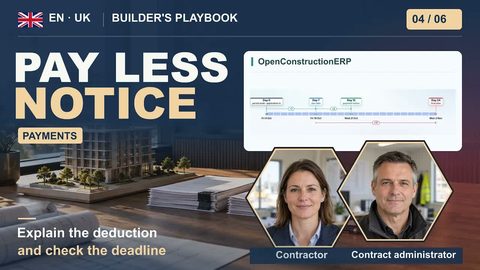 6:27Payment Notice vs Pay Less NoticeEnglish
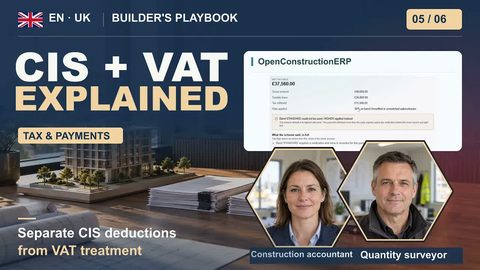 6:34CIS Deductions and VAT Reverse ChargeEnglish
 5:54How to Value a JCT VariationEnglish
Courses
Checklists
Short checklists that go with this process.
Practise it in OpenConstructionERP
The free videos explain the process. The full course lets you run it yourself in the ERP, task by task.