

































Stage 6 of 7 · Build
Progress billing, payment applications, retention
Value the work done each period, apply retention and get it certified and paid.
- ProfessionalSidr Grove, Dubai: FIDIC interim payment and retention +11 more
- Free videos33 videos
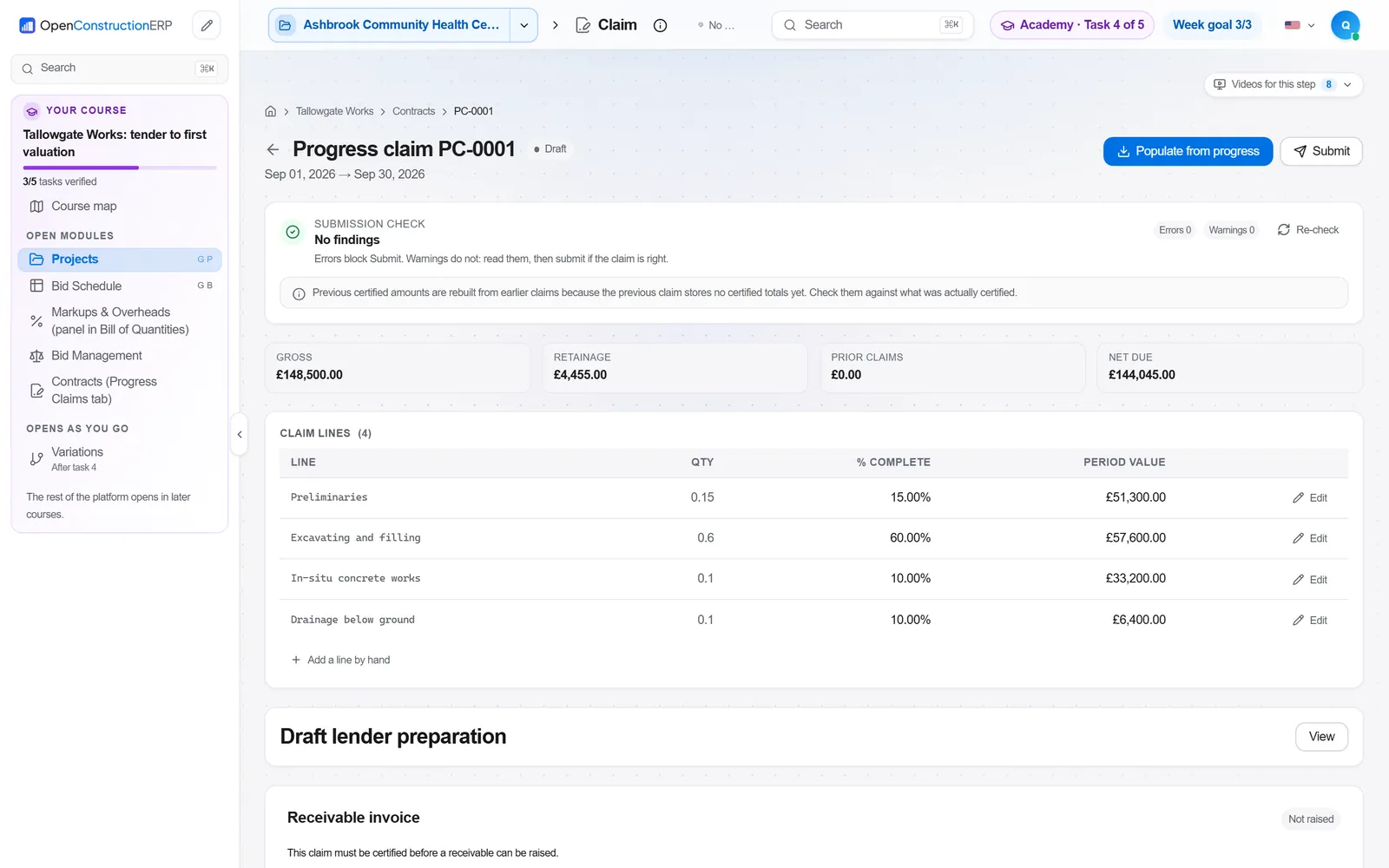
- Output
- Interim payment application, valuation certificate and retention record
- Module
- Cost control, EVM and risk
- Documents
- Standards and references
What it is
Progress billing is how a contractor is paid during the work. At set intervals, usually monthly, the contractor applies for payment for work completed, materials on site and agreed variations, less previous payments and retention. The client's representative values the work, certifies the amount due and the client pays within the contract period. The same cycle runs between contractors and subcontractors.
Cash flow keeps a construction business running, and progress billing is its main source. Late or under-valued applications strain contractors and their supply chain; over-valuation exposes the client. Retention, usually a small percentage held back from each payment and released at completion and after the defects period, protects the client against incomplete or defective work. Clear valuations linked to the bill and progress records reduce argument each month.
Who does it
- Contractor's quantity surveyor
- Prepares the payment application with supporting measurement and variations.
- Client's quantity surveyor or engineer
- Values the work and issues the payment certificate.
- Subcontractors
- Submit their own applications to the main contractor.
- Finance
- Issues invoices, tracks receipts and chases late payment.
- Project manager
- Confirms progress and approves the application before submission.
How it runs
Measure work done
Record progress per bill position or activity at the valuation date.
Add materials and variations
Include materials on site where the contract allows and agreed or claimed variations.
Calculate gross value
Total the value of work done to date, then deduct retention and previous payments.
Submit the application
Send the application with backup before the date set in the contract.
Value and certify
The client's side checks the application and issues a certificate or payment notice.
Invoice and collect
Issue the invoice, including e-invoice formats where required, and track payment.
Manage retention
Track retention held and released at completion and at the end of the defects period.
How it differs by country
- United Kingdom
- The Construction Act requires an adequate mechanism for interim payments, payment notices and pay less notices. JCT and NEC4 build these into their payment procedures, and retention of around 3 to 5 percent is common.
- Germany
- § 16 VOB/B provides for interim payments (Abschlagszahlungen) for work done, and § 632a BGB gives a statutory right to interim payments. Retention is usually agreed as a security deposit (Sicherheitseinbehalt) under § 17 VOB/B, often replaced by a guarantee.
- France
- Public contracts pay monthly by acompte, and the retenue de garantie is limited to 5 percent of the contract amount, released after the one-year guarantee period. It can be replaced by a bank guarantee or caution.
- United States
- Contractors apply for payment on AIA G702 with the schedule of values continued on G703. Retainage, often 5 to 10 percent, is regulated by many state prompt payment laws.
- International
- Under FIDIC 2017 the contractor submits a Statement each month and the Engineer issues an Interim Payment Certificate. Retention Money is set in the Contract Data and half is typically released at taking over.
Common mistakes
- Submitting the application late and losing a whole payment cycle.
- Including claimed variations without backup, which delays certification of the whole application.
- Not checking the certificate against the application line by line, so under-certification goes unchallenged.
- Forgetting to apply for retention release at completion and at the end of the defects period.
- Overvaluing early work to improve cash flow, which creates trouble later in the project.
In OpenConstructionERP
Module: Cost control, EVM and risk
In OpenConstructionERP the Finance module handles invoicing, payments and budgets for each valuation cycle. E-invoice generates and validates EN 16931 electronic invoices in CII and UBL syntaxes where clients require them. Cost-Value Reconciliation & Cashflow compares value earned with cost and forecasts cash. The 5D Cost Model and Full EVM give the S-curves and value data behind each application. On the supply chain side, Subcontractor Management in the procurement group tracks subcontractor payment applications and retention.
Finance · E-invoice · Cost-Value Reconciliation & Cashflow · 5D Cost Model · Full EVM · Subcontractor Management
The app runs at openconstructionacademy.com/app for course learners.
Free videos
 7:32Nota fiscal de obra (NFS-e): retenções de ISS e INSSPortuguês
 2:21Акт 19: от изпълнените СМР до сумата за плащанеБългарски
 4:57Stato di avanzamento lavori: dal certificato alla fatturaItaliano
 2:17Окончателен акт: остатък от аванса, приемане и гаранцииБългарски
 4:57CCDC 2 Monthly Progress DrawEnglish
 5:39Facture et paiement : comprendre le soldeFrançais
 5:25预付款基数怎么核对:签约一周的三笔钱与三张保函中文
 5:15进度款怎么算:干了361万,为什么只到账252.7万中文
 5:25竣工结算审核:送审3,701.18万,审定3,664.7万中文
33 videos
 4:50Podizvođači: ugovor, situacija i plaćanjeHrvatski
 4:45Privremena situacija iz izvedenih radovaHrvatski
 4:02Nachträge und Abschlagsrechnungen prüfenDeutsch
 3:13Manage Your Subs: Pay, Hold BackEnglish
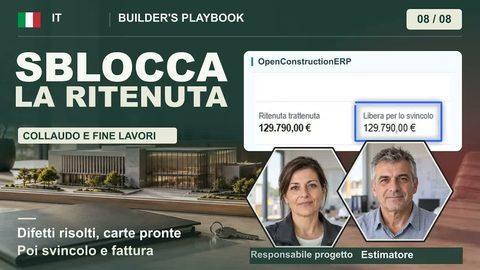 5:09Fine lavori: collaudo e svincolo della ritenutaItaliano
 4:37Facturation, retenue et hypothèque légaleFrançais
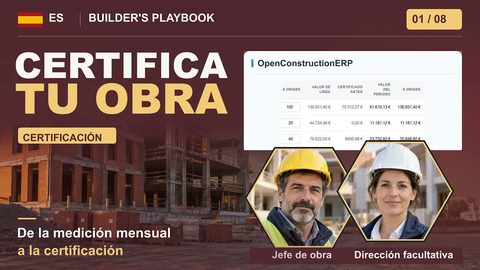 3:21Certificación de obra: del avance mensual al cobroEspañol
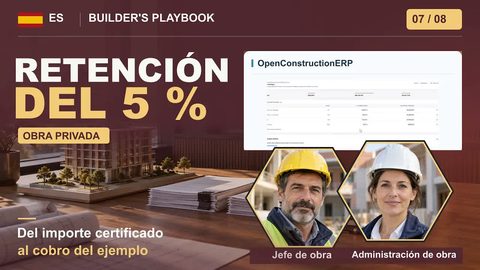 2:43Obra privada: certificación, retención del 5 % y facturaEspañol
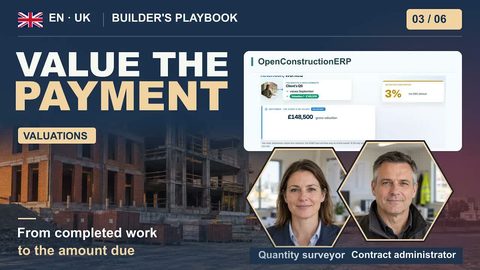 6:25JCT Interim Payments and RetentionEnglish
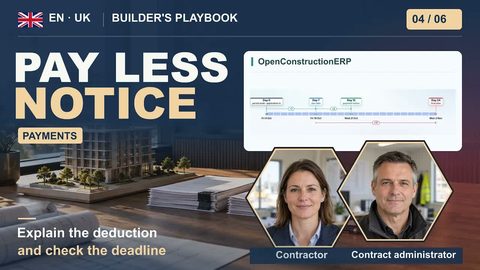 6:27Payment Notice vs Pay Less NoticeEnglish
 7:29Medição de obra pública: boletim, aditivo de 25% e reajuste INCCPortuguês
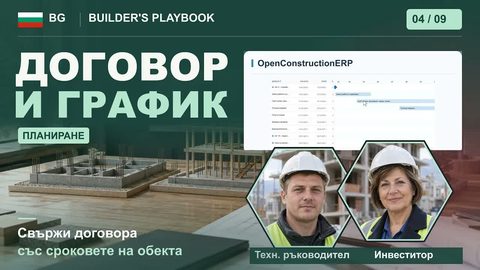 2:18Договор и линеен график: срок, аванс и етапи на строителствотоБългарски
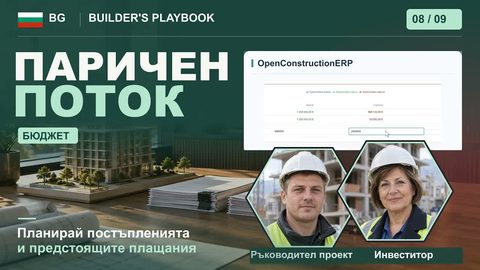 2:08Бюджет и паричен поток: кога строителният проект остава без париБългарски
 4:35The Construction Payment ClockEnglish
 4:48Schedule to Substantial PerformanceEnglish
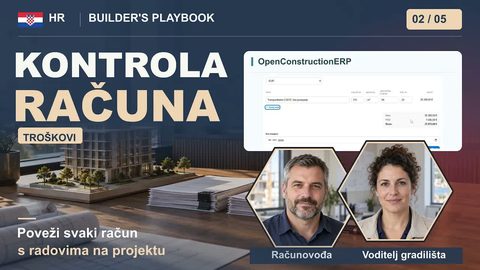 4:28Ulazni računi povezani s troškovnikomHrvatski
 5:13Financijsko stanje projekta i višak radovaHrvatski
 3:45Bauabnahme und SchlussrechnungDeutsch
 3:22Budget vs Actual: Track Every DollarEnglish
 4:59Subappalto: confrontare le offerte e scegliere l'impresaItaliano
 4:45Consuntivo di cantiere: dove è finito il margineItaliano
 2:09Control de costes de obra: cierre de mes y margen realEspañol
 2:00Recepción y liquidación de obra: repasos, certificación y garantíaEspañol
 6:34CIS Deductions and VAT Reverse ChargeEnglish
Courses
- Professional
 Sidr Grove, Dubai: FIDIC interim payment and retention1. Contract Data, Advance Payment and the retention limit
- FreeInterim payment on Ashbrook (with a US pay application)1. The payment timetable: assessment, due date, final date, pay less
- FreeУчилище в Белостен: предаване, въвеждане в експлоатация и гаранции1. Констативен акт обр. 15: забележки, punch list и задържана сума
- Professional
 Haselmoor Los 05: Aufmaß, Nachträge und Schlussrechnung nach VOB/B1. Gemeinsames Aufmaß als GAEB X31 einlesen
- FreeTallowgate Works: tender to first valuation4. Interim Valuation 1 (September)
- Free
 Corvennick Building fit-out: bid to first change order4. Pay application No. 1 (September)
- FreeKita Erlengrund: vom LV zum ersten Nachtrag4. 1. Abschlagsrechnung mit Sicherheitseinbehalt, USt und § 13b
- Free
 Groupe scolaire de Landrevel : de l'étude de prix à l'avenant4. Projet de décompte mensuel n° 1 (juin 2026)
- Free
 Palestra della scuola di Valcerasa: dal computo metrico alla variante4. SAL n. 1 e certificato di pagamento
- Free
 Centro cívico de Valdelagua: del BC3 al precio contradictorio4. Certificación mensual nº 2, a origen
- Free
 Przedszkole w Brzozowej Woli: od kosztorysu do aneksu4. Odbiór częściowy nr 1 i faktura przejściowa
- FreeУчилище в Белостен: КСС, акт обр. 19 и непредвидени СМР4. Акт обр. 19 № 1 и междинно плащане с приспадане на аванса
Checklists
Short checklists that go with this process.
Practise it in OpenConstructionERP
The free videos explain the process. The full course lets you run it yourself in the ERP, task by task.